By Yuna Lee, Year 11
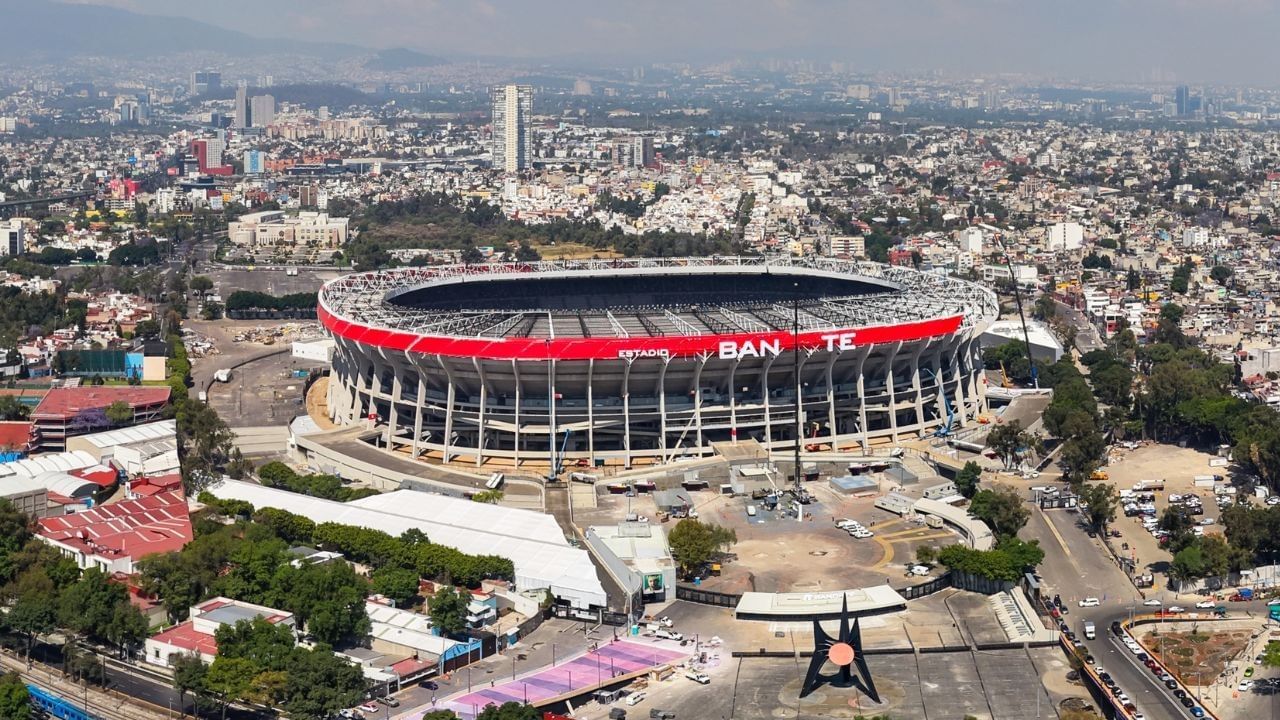
The 2026 FIFA World Cup is the first ever to be hosted across three different host nations: Canada, Mexico, and America. It has over 48 teams participating worldwide that are competing across a wide range of climates and altitudes, creating a challenge for the players. The tournament began in Mexico, with the opening match taking place in Mexico City, one of the highest altitude host cities, at approximately 2240 m above sea level, a height with limited oxygen availability.
Elite football teams train for weeks in high altitude before important matches in high altitude countries like Mexico. This year, the national South Korean team spent about three weeks training in Salt Lake City, Utah, at an altitude of about 1500 m, while the South African team arrived in Mexico City approximately 10 days before the opening match to adapt. But what exactly is the impact of high altitude on the football players, and why is it that national teams invest weeks preparing for it before an important match?
The answer lies in acclimatisation, which is the process by which the human body gradually adapts to a new environment, such as a temperature, altitude, or humidity, allowing an individual to maintain fitness. Successful acclimatisation can make a huge difference in recovery, endurance, and performance, making it an essential process for football players.
Acclimatisation occurs over several weeks, through a series of physical responses that help against the reduced oxygen levels. These are the following stages of the adaptation:
First, when exposed to high altitudes, the body enters an oxygen-deprived state called hypoxia due to the lower atmospheric pressure. Fewer oxygen molecules enter the lungs with each breath, as there is less of a pressure gradient. Therefore, less oxygen is transported across the body, through the bloodstream, and to the muscles.
After a few minutes, a specialised oxygen-sensing cell called a glomus cell (a chemoreceptor), located in the carotid bodies, detects a decrease in oxygen in the body. The signals from the glomus cell activate the autonomic nervous system, triggering an increase in breathing and heart rate to improve oxygen intake. The body also loses more water through faster breathing and increased urination, which reduces the amount of water in the blood. This allows existing red blood cells to be more concentrated in the blood, improving oxygen transport in the short term. However, increased breathing and heart rate also increase the body’s energy output, leading to faster fatigue and lower endurance, which is critical for the condition of athletes.
Over several days and weeks, the kidneys release a hormone called erythropoietin (EPO). The EPO travels through the bloodstream to the bone marrow, where it stimulates the production of red blood cells in a process called erythropoiesis. As more red blood cells are produced, the blood’s oxygen-carrying capacity improves. As a result, more oxygen can be delivered to exercising muscles.
After prolonged exposure to hypoxia, the body also adapts by becoming more efficient in its use of oxygen. For example, the body produces more mitochondria, which are organelles that produce ATP through aerobic respiration. An increased number of mitochondria can help to produce ATP more efficiently, which powers muscle contractions. Other examples include the growth of new capillaries around muscle cells to increase the efficiency of oxygen transport to muscles, and changing the red blood cell chemistry to help release oxygen more readily to the body’s tissues.
Overall, acclimatisation allows players to recover quickly from fatigue, improve oxygen transport and aerobic endurance, which can significantly impact the player’s performance. However, these changes take several weeks, which is why elite athletes complete altitude training for a few weeks before important competitions. As different teams are assigned a specific schedule for the World Cup this year, some teams may play more games in high altitudes than others. This may act as a disadvantage, and it will be interesting to see whether the high altitude will have a significant impact on team performance and ultimately, on which team makes it to the finals.
Works Cited
Ainash Childebayeva, et al. “Advances in Understanding Adaptive Hemoglobin Concentration at High Altitude.” American Journal of Human Biology, vol. 37, no. 7, Wiley, July 2025, https://doi.org/10.1002/ajhb.70087.
Storz, Jay F., and Naim M. Bautista. “Altitude Acclimatization, Hemoglobin-Oxygen Affinity, and Circulatory Oxygen Transport in Hypoxia.” Molecular Aspects of Medicine, vol. 84, Apr. 2022, p. 101052, https://doi.org/10.1016/j.mam.2021.101052.
Windsor, J. S., and G. W. Rodway. “Heights and Haematology: The Story of Haemoglobin at Altitude.” Postgraduate Medical Journal, vol. 83, no. 977, Mar. 2007, pp. 148–51, https://doi.org/10.1136/pgmj.2006.049734.