By Wu Zhang, Year 12
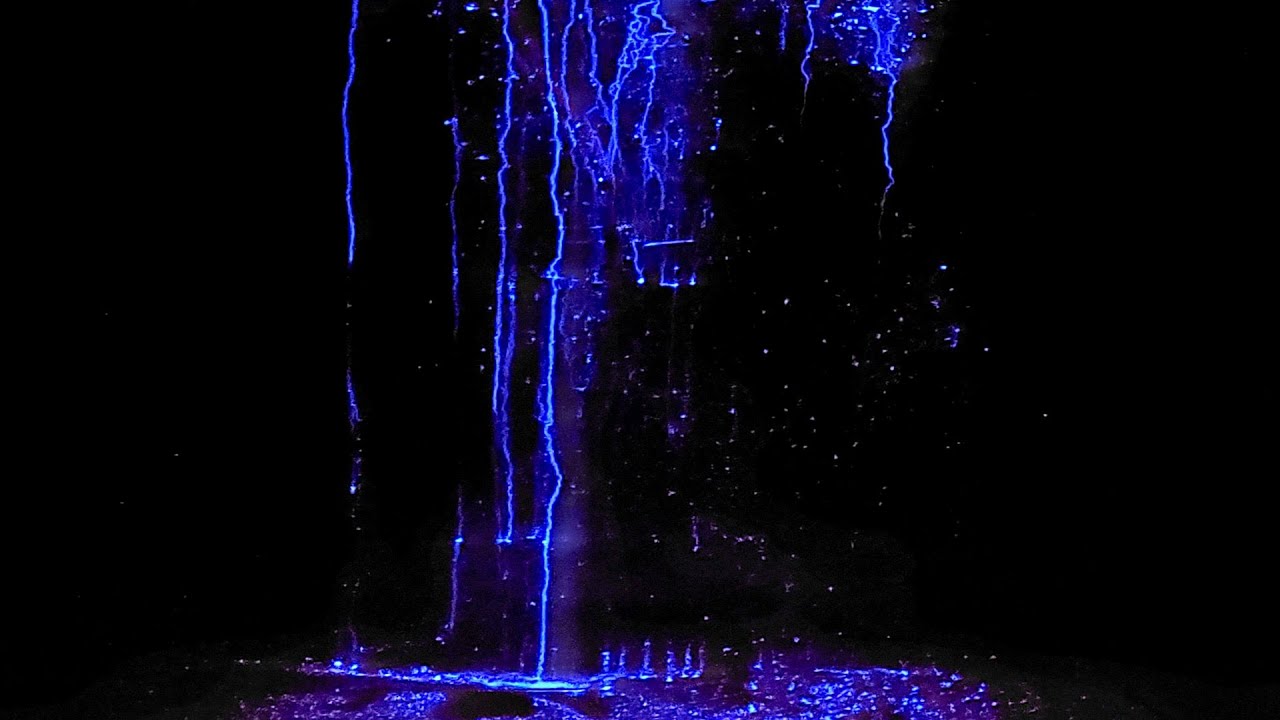
In forensic science, one of the most dramatic chemical reactions is the glowing blue light produced by luminol. Often shown in crime documentaries, luminol is sprayed onto a surface where blood may be present. If traces of blood remain, even after cleaning, the area can emit a faint blue glow in the dark. This glow is not caused by heat or electricity, but by a process called chemiluminescence, where a chemical reaction releases energy in the form of light.
Chemiluminescence is sometimes called “cold light” because very little heat is produced. In a normal light bulb, electrical energy heats a filament until it glows. In chemiluminescence, however, molecules absorb energy from a chemical reaction and become excited. When these excited molecules return to a lower energy state, they release the extra energy as photons, which are particles of light. This is why glow sticks, some marine organisms, and luminol reactions can produce light without becoming hot.
Luminol, known chemically as C₈H₇N₃O₂, is especially useful because it reacts with an oxidising agent, usually hydrogen peroxide, under alkaline conditions. During the reaction, luminol is oxidised and forms an excited intermediate, commonly associated with 3-aminophthalate. As this excited product returns to its ground state, it releases energy as visible blue light. The emitted light is usually blue because the energy difference between the excited and ground states corresponds to wavelengths in the blue region of the visible spectrum.
The reaction is much more effective when a catalyst is present. In forensic investigations, the iron found in haemoglobin, the oxygen-carrying pigment in red blood cells, can catalyse the luminol reaction. This means that blood does not create the glow directly; instead, it speeds up the oxidation of luminol, allowing light to be produced more clearly. This is why luminol can reveal blood traces that are too dilute or faint to be seen by the naked eye.
The basic idea of the reaction can be summarised as follows:
luminol + hydrogen peroxide → excited 3-aminophthalate + nitrogen + light
This reaction shows an important principle in chemistry: energy changes during chemical reactions are not always released as heat. In chemiluminescence, part of the chemical energy is transferred into electronic energy, exciting electrons in the product molecules. When these electrons fall back to a lower energy level, light is emitted.
Luminol is valuable in forensic science because of its high sensitivity. It can help investigators detect very small traces of blood, even if a surface has been washed. However, luminol is not a perfect test. Some substances, such as bleach, certain metals, and plant materials, can also cause luminescence, creating false positives. Therefore, luminol is usually used as a preliminary test rather than final proof that blood is present. Further confirmatory tests are needed to verify the result.
The use of luminol also demonstrates the relationship between chemistry and real-world problem-solving. A reaction that might seem like a simple blue glow can provide investigators with clues about events that occurred at a scene. At the same time, it requires careful interpretation, because scientific evidence must be reliable and not based only on appearance.
Overall, luminol is an excellent example of chemiluminescence because it shows how chemical energy can be converted directly into light. Its reaction with hydrogen peroxide, catalysed by iron-containing compounds such as haemoglobin, produces a distinctive blue glow that has become highly important in forensic science. Beyond crime scene investigation, luminol also helps us understand broader chemical ideas, including oxidation, catalysis, excited states, and energy transfer. The glow of luminol may last only briefly, but it reveals the powerful link between invisible chemical changes and visible evidence.
Works Cited
Harris, Tom. “How Luminol Works.” HowStuffWorks, 11 June 2002, science.howstuffworks.com/luminol.htm.