By Jamila Talishli, Year 12.
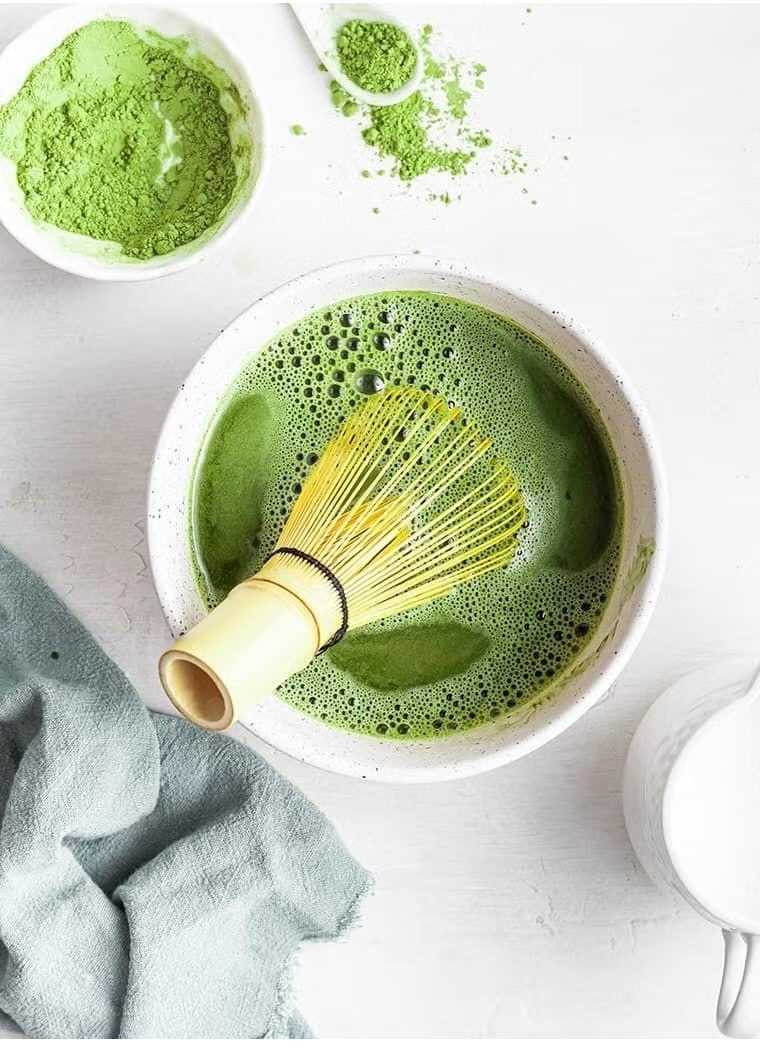
In the past few months, matcha has taken the world by storm. Whether it is in lattes, smoothies, desserts, and even face creams, the bright green powder is a sensation with health-aware buyers. Known for its antioxidants, stress-fighting properties, and Japanese origins, matcha seems to be the ultimate “green” product. But behind the hype is a more complex backrgound—one that encourages us to be aware about sustainability and the true environmental value of the popular drink.
Although matcha comes from the same plant as green tea, how it is made requires way more energy. For matcha to have its trademark bright green color and unique flavor, the tea plants must be shaded three to four weeks before they are harvested. That means that plastic covers or shade nets are used and are typically on top of wooden or metal frames, adding to the materials and energy that go into its production. The shading process slows the growth of plants, which means that less can be harvested at a time and more land is needed to meet rising global demand. Compared to green tea, which is harvested many times a year, high-quality matcha is usually harvested only once or twice a year.
Transportation is also an issue. Most of the matcha in the world is produced in Japan and China, but demand has rapidly increased in America, Europe, and other regions of the globe. To keep matcha fresh, since it deteriorates flavor and color really quickly, many suppliers choose air freight over slower transports. Unfortunately, air transport carries a much higher carbon footprint, especially for a product that travels thousands of kilometers only to sit in your cup. Local matcha is practically impossible to find since the plant needs very specific growing conditions and traditional Japanese techniques. As a result, almost each scoop of matcha has an invisible cost in terms of emissions.
Another problem is packaging. Matcha is really sensitive to heat, light and moisture, so it’s usually packaged in small metal cans, plastic-lined packets, or foil bags. These are difficult to recycle, particularly the multi-layered ones, and build up in landfills, and single-serve matcha sticks are convenient for on-the-go use but create even more waste. Although there are some that now use compostable or reusable packaging, it is not yet common in the industry.
So, then, is matcha still worth drinking? Yes- just more mindfully. Compared to bottled energy shots or coffee drinks in plastic cups, matcha is still pretty green. The trick is being considerate with your behavior: go for organic matcha to avoid pesticide-ridden farming, select companies that offer bulk or returnable packaging, and use matcha as a special treat instead of a daily habit that gets shipped over long distances.
Matcha may be healthy for your body, but it’s not automatically healthy for the planet. As with most global food trends, it comes with its cons, but by paying closer attention to how it’s grown, packaged, and transported, we can enjoy this ancient green tea responsibly without giving up its earthy and calming magic.