By Pol Hurtado Chade, Year 10
Days before the Honduran presidential election, Tito Asfura was trailing third in the polls—until a single social media post changed the course of the race. He represented the far right party of Honduras and the National Party of Honduras and focused his campaign on job creation, decentralization, security, investment, health, and education. However, he was mainly criticised for his alleged corruption and mismanagement of public funds during his tenure as mayor of Tegucigalpa, allegations that he strongly denies.
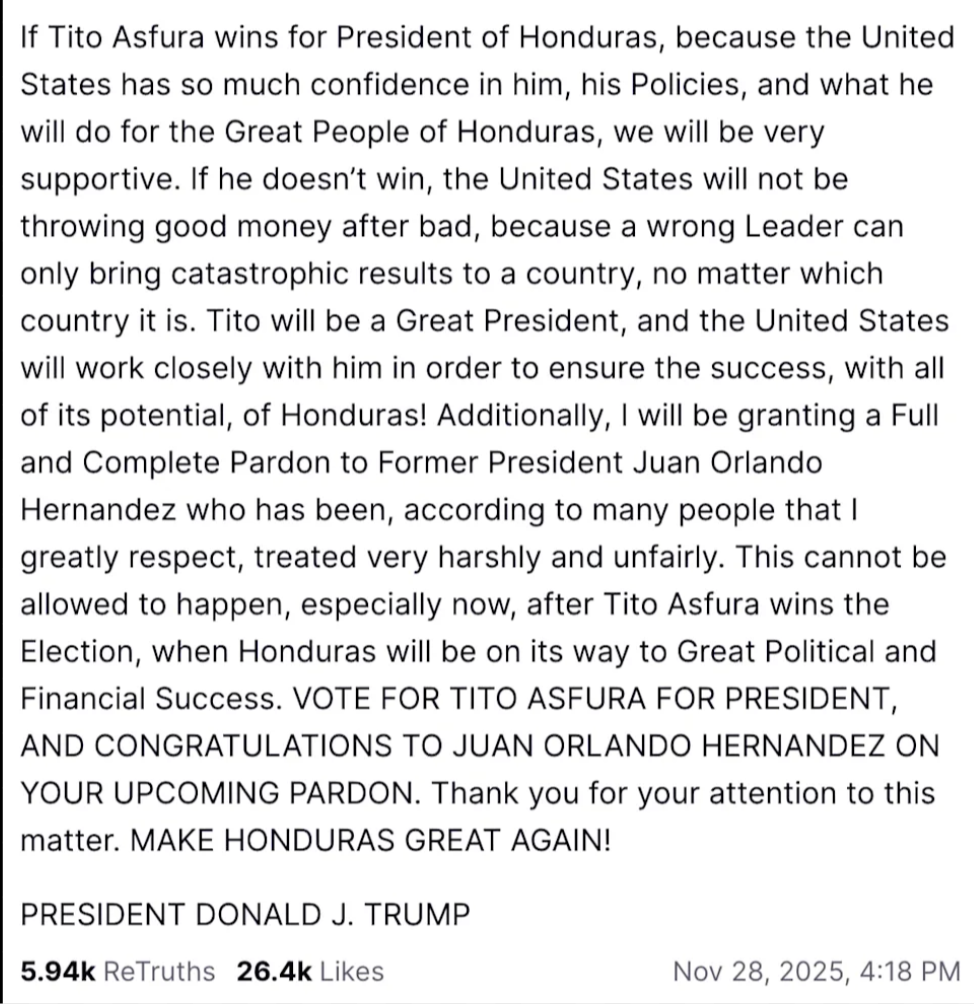
Then, on November 28, just two days before the election, Donald Trump posted on his Truth Social platform. He threatened to cut US aid to Honduras, which supports development, security, and health programs across the country, if the people did not elect Tito Asfura. He wrote, “If he [Asfura] doesn’t win, the United States will not be throwing good money after bad”. The US provides Honduras with 193.5 million dollars worth of economic, development, and security assistance each year. This instilled fear in many Hondurans who depended on USAID, pushing them to vote for Tito Asfura—a decision they likely wouldn’t have made otherwise.
He then pardoned former president of Honduras Juan Orlando Hernández, a member of the same party as Tito Asfura, who was convicted in 2024 of trafficking 400 tons of cocaine into the United States, which earned him a 46-year sentence. This is a sharp and somewhat hypocritical contrast to the “war” Trump is waging against narco traffickers, alleging coming from Venezuela.
He claimed he pardoned the former president because the trial and his conviction were a “Biden administration setup”, a claim for which there is no evidence. However, many think that this was pushed by one of his advisers, Roger Stone, who convinced Trump it was just Biden administration lawfare. Alternatively, it was a demonstration of power to Hondurans that he is capable of anything: if he could pardon a convicted drug trafficker, he would not hesitate to cut aid to Honduras if the election did not go his way.
This is blatant intervention in a foreign election, which is a crime under international law, however this is not the first time he’s done this. It’s part of his broader plan to make far-right parties win all over the world. He has done this by loaning a $40 billion bailout package to Argentina or by setting tariffs on Brazil to pressure them into pardoning the former far-right president Jair Bolsonaro, who was sentenced to 27 years in prison for conspiring to stay in power after his loss in the 2022 Brazilian elections.
By using these tactics, he consolidates his power on the international stage and surrounds himself with loyal leaders around the world, letting him continue his agenda outside the United States.