By Sarah Hines, Year 11
The first of December, also known as Advent, is a very culturally significant day. It not only announces the beginning of the December month but it also traditionally opens a season of expectation and anticipation. Each culture has a different way of celebrating this time.
The date of the first celebration of Advent is unknown, but we can definitely trace its origins back to Roman times, around 480 BC. Back then, the Bishop ordered all the faithful (that is everyone who believed in Jesus Christ) to fast three times a week, from the 11th of November until Christmas. This tradition was kept throughout many centuries and represented a time of waiting and expectation for Christ’s return. This means that originally Advent lasted 40 days.
Since then, many other traditions have been created, such as the crown of Advent, a German tradition that dates back to 1839 and was first pioneered by the pastor Johann Heinrich Wichern. This tradition consists of lighting one candle every Sunday starting from November 15th until Christmas, and each candle has a different religious meaning.
There are also many carols and songs especially written for this time, which are recited on each Sunday of Advent during Mass. There are also many great artists such as Jean Sébastien Bach who wrote songs for this period.
One tradition that is very common today, everywhere in the world is the Advent Calendar. This was invented in 1851 by the German pastor Johann Heinrich Wichern. Before this, in Germany, the days were counted by lighting a candle every day, or by drawing a stroke of chalk on the doors every morning. The very first Advent calendar was wooden and handmade by the pastor himself. Now these calendars progressed across the years, more traditional calendars would have pictures everyday showing the Nativity story all the way until the birth of Jesus on Christmas day. It was only until much later, during the 1950s that the idea of having chocolate-filled calendars appeared, turning this religious holiday into a more commercialized one. Since then, companies have made many different calendars, some with beauty products, some with Lego…
In Sweden, they have a slightly different way of counting down the days; instead of Advent Calendars, they have an Advent Candle. They light the candle on the 1st of December, and it has a marker for each day, meaning that as it burns down it gets closer to Christmas.
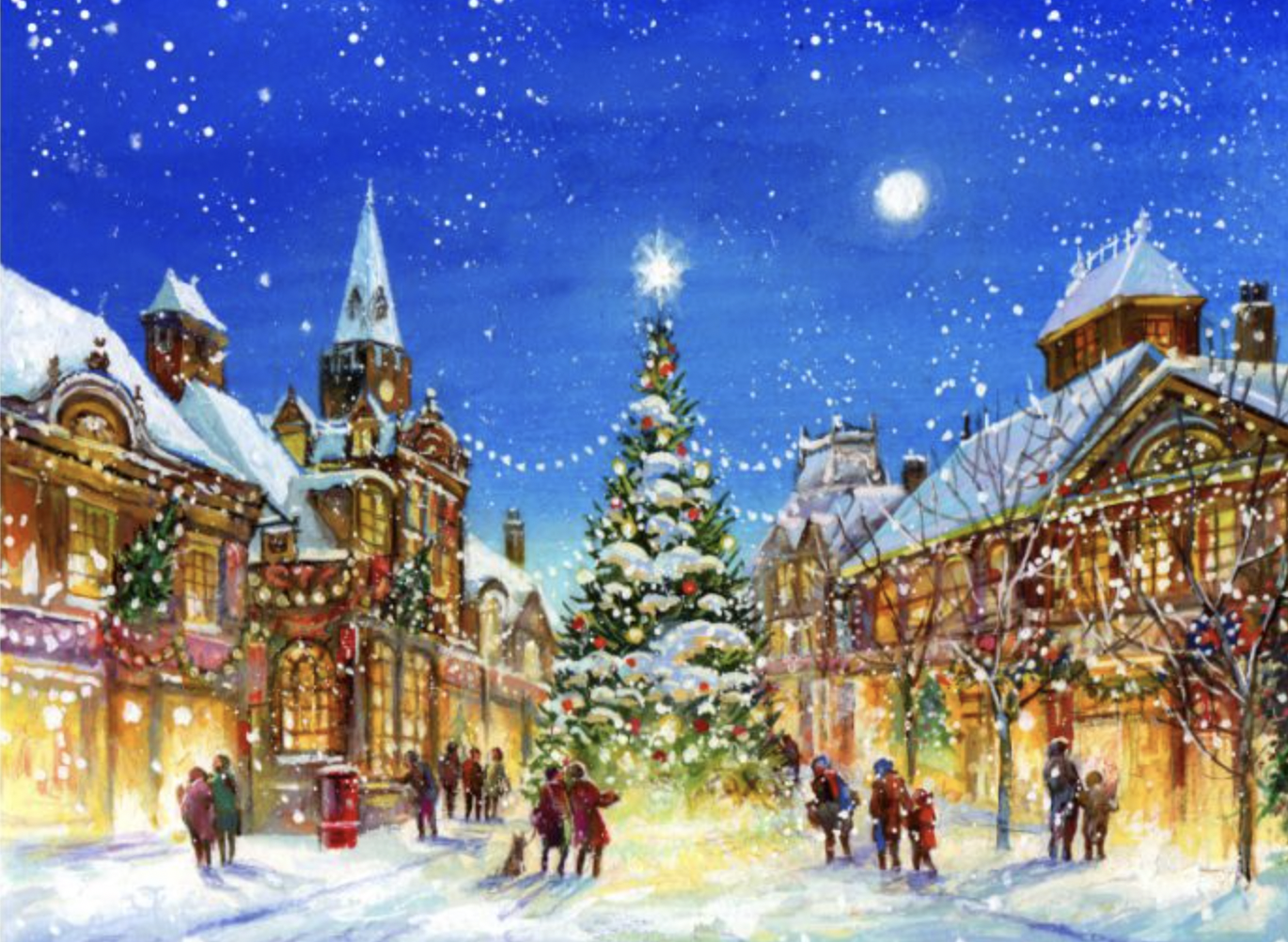
Another very important tradition today that contributes to the anticipation of Christmas is the installation and decoration of the Christmas Tree. The first Christmas tree dates back to the early 16th century, in Latvia. Back then people would set them up in marketplaces and squares and then dance around them. Later this tradition spread to Alsace where the idea of everyone having their own individual Christmas tree appeared. But back then they would either leave the trees bare or use things like roses or apples to decorate them. Gradually during the centuries, trees began to be decorated with things like sweets or toys, but it wasn’t until the late 19th century that glass ornaments and garlands where introduced. On the other hand, the idea of placing presents under the tree appeared around the 16th century, also in Germany.
All around Europe, many countries celebrate Advent with different types of plants. For instance, in Britain, they decorate their houses with Poinsettias. These flowers are red with bright green leaves, the traditional Christmas colours, and in the days preceding Christmas the British will cover their houses with the latter and also give them as a gift to their neighbors and friends. In the Czech Republic, they will cut branches from a cherry tree on the 4th of December and then put them in water, meaning that they will have blossomed in time for Christmas Eve.
One tradition, only practiced in Hungary, is that on the 13th of December, all unmarried women are allowed off work, and instead they write 13 men’s names on 13 separate pieces of paper. Each day until Christmas, they will throw a random one away, and the last one is the name of their future husband.
Finally, in Denmark, they will make an Advent wreath. However, this wreath is specific to their country as it is made out of bread dough and filled with fruits (such as raisins), and it is called a Jule brod.
This coming season, therefore, varies for every culture, filled with many different traditions and beliefs. They each have unique ways of celebrating this time, even though there are also many traditions that have spread all across the world.
Sources:
Gordan, Lucy. “Célébrer L’Avent : Son Histoire Et Ses Traditions.” Inside the
Vatican, 2023, insidethevatican.com/magazine/celebrating-advent-its-history-and-traditions/?gad_source=1&gad_campaignid=451555168&gclid=EAIaIQobChMIw96S3eKIkQMVQgYGAB14zAxNEAAYASAAEgK4V_D_BwE. Accessed 24 Nov. 2025.
The Rocks Christmas Tree Farm. “The History of Christmas Trees.” Real Christmas
Trees, 2024, realchristmastrees.org/education/
history-of-christmas-trees/. Accessed 24 Nov. 2025.
“The Seven Most Beautiful Advent Traditions from Europe.” Stars for Europe,
2025, starsforeurope.com/en/blog/
the-seven-most-beautiful-advent-traditions-from-europe/. Accessed 24 Nov.
2025.