By Skyler Mason, Year 12
“To see with eyes unclouded by hate”
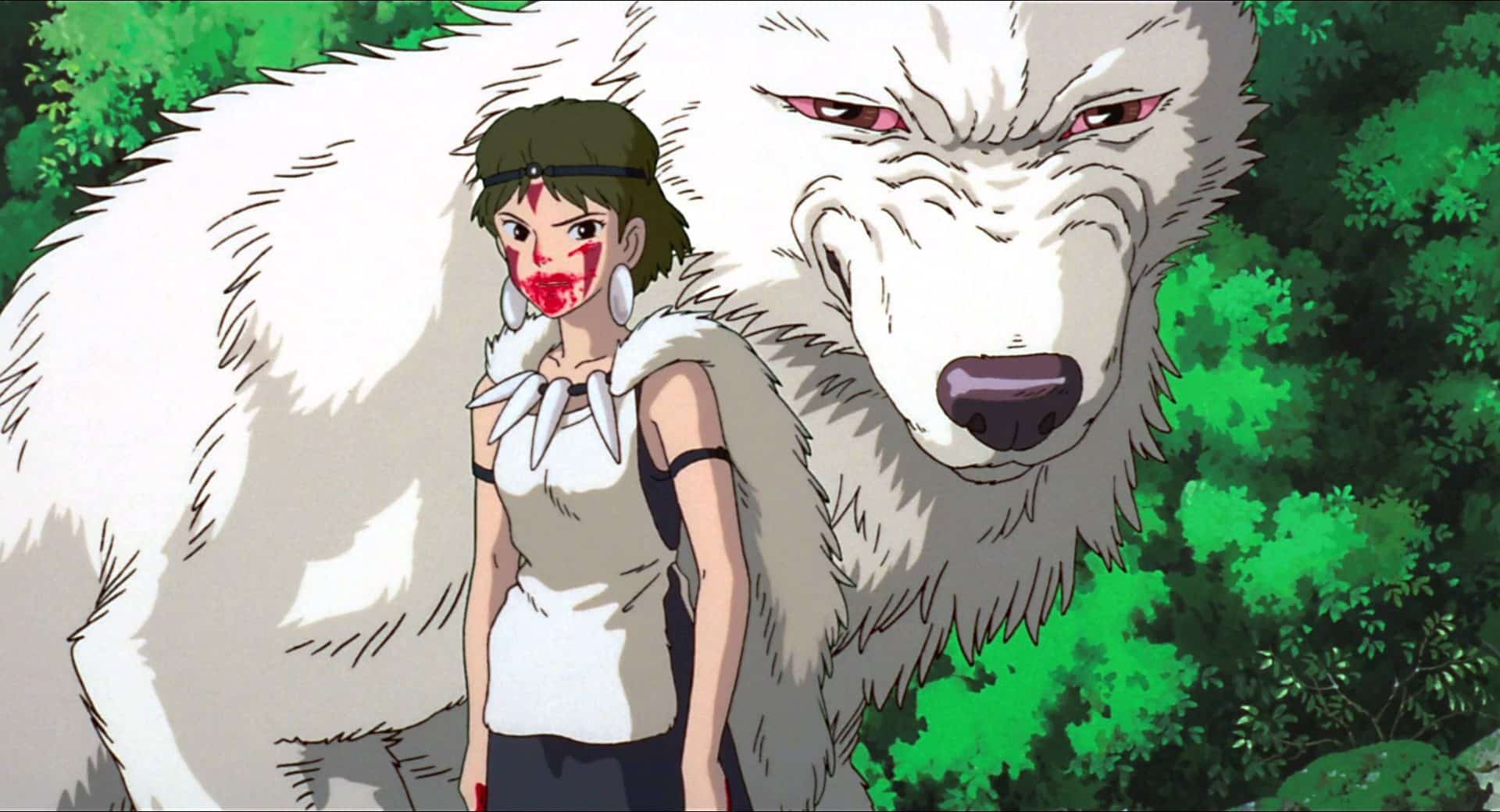
This is a quote from Hayao Miyazaki’s 1997 animation Princess Mononoke.
I found it especially profound, not only because of its poetic ring and its real-life applicability but also because of how perfectly it encapsulates the meaning of the movie. This sentiment is likewise found in the title, which translates to “Princess Monster”, which, given that ‘monster’ comes from ‘to show’, establishes the intention of the film: to shed light on lesser-explored aspects of society.
The film follows a young warrior, Ashitaka, as he travels to the Cedar Forest—home of the Forest Spirit—to remove a curse put upon him. When he arrives, however, he finds the forest under siege by the industrial Iron Town. With its adventurous attributes, like the presence of gods, demons, quests, and exploration, as well as the external appearance of a classic duel between good and evil, the setup has every indication of being a conventional adventure film. However, through having Ashitaka observe through a neutral lens, he brings an unbiased perspective through which Miyazaki explores the ambiguities and complexity of the conflict. Through this, the audience is given access to a perception not often given in media, where the flaws and unexpected virtues of both sides are impartially revealed. In turn, this approach doesn’t attack any character or opinion so much as it extends to a criticism of polarisation culture as a whole.
In the film, this is realised through Ashitaka refusing the initial black and white categorisation and pursuing the unbiased truth. In this regard, he defies the conventional hero characterisation because his purpose is not to defeat evil or seek justice but to simply “see with eyes unclouded by hate.” This allows him to recognise that there is no obvious villain; instead, the evil manifests as the hatred inside of everyone.
As the movie progresses, it culminates in the revelation of both sides that change is needed, even though neither is willing to make the first concession. Ultimately, a catalyst forces change, and through sacrifice on both sides, a new beginning is achieved. I think the message of the film is quite insightful, as it teaches that, despite how difficult it may seem, it is often easier to start fresh than continue in a cycle of mutual destruction.
Lastly, I think the final beauty of the film is how well it applies to real life. It warns about the consequences of not being able to look through an unbiased lens, a failure that has led to many of humanity’s atrocities, showing that only harm can come from perpetuating violence and hatred.