By Wu Zhang, Year 12
That sharp hiss when you open a Coke bottle isn’t just sound, it’s chemistry in action. Behind the fizzing drinks that we all love is a series of controlled chemical systems, governed by equilibrium, thermodynamics, and acid–base reactions.
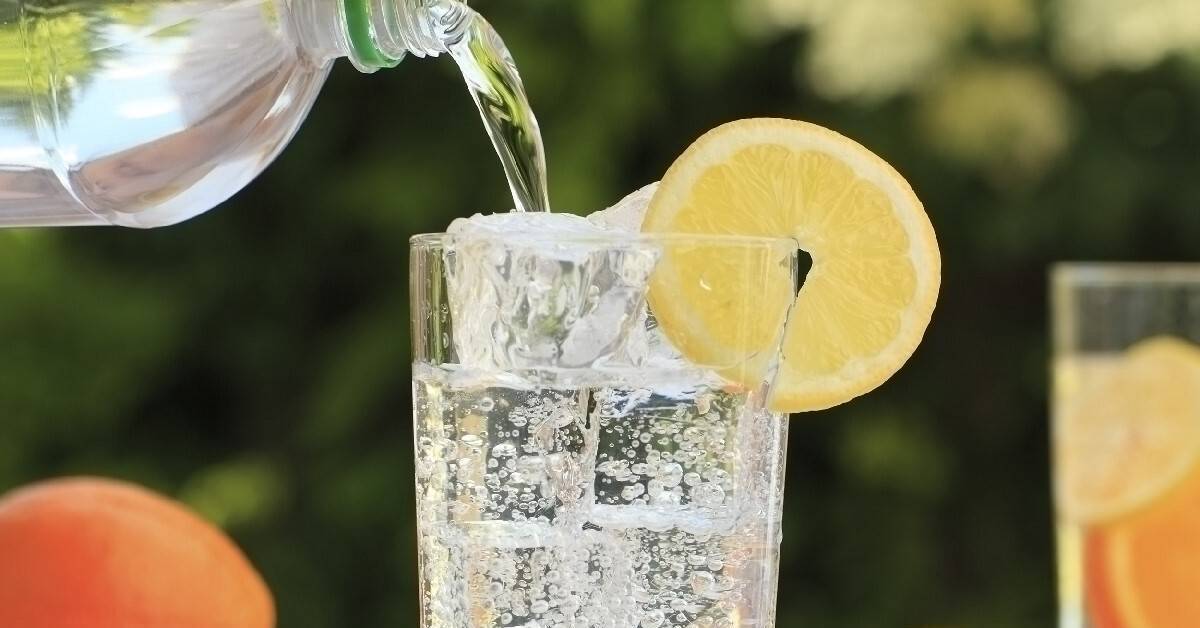
Carbonation works by forcing carbon dioxide gas (CO₂) into water under high pressure. Inside a sealed bottle or can, the pressure keeps large amounts of gas dissolved in the liquid; however, the moment you open it, the pressure drops. The system becomes unstable, and the dissolved gas escapes as bubbles. The fizz you see rising through your drink is the system re-establishing equilibrium to be stable.
Most people like to drink it cold, mainly due to the sensation, yet it turns out there’s a scientific reason for it as well: cold drinks hold more dissolved gas than warm ones. That’s why soda is bottled and stored cold and why a warm drink goes flat much faster. As the temperature increases, gas molecules have more kinetic energy and escape the liquid more easily by breaking the weak intermolecular forces holding non-polar CO2 molecules and polar H2O molecules together.
But carbonation isn’t just about bubbles. When carbon dioxide dissolves in water, a small portion reacts to form carbonic acid, a weak acid that is described by the equation :
CO2+H2O⇌H2CO3
Carbonic acid then (H₂CO₃) partially dissociates:
H2CO3⇌H(+) +HCO3(−)
This makes sparkling water slightly acidic, giving it its distinctive, tangy taste. Most sparkling waters have a pH between 3 and 5. Soft drinks are even more acidic because manufacturers add extra acids for flavour. For example, beverages produced by The Coca-Cola Company contain phosphoric acid (H3PO4), which lowers the pH further. This acidity contributes to the drink’s distinctive bite, but it also explains why dentists warn about enamel erosion from frequent consumption.
Have you ever noticed that bubbles form in specific spots along the inside of a glass? They don’t appear by random. Tiny scratches, dust particles, or rough surfaces act as “nucleation sites,” allowing gas to gather and form visible bubbles. This is also why the famous Mentos-and-soda experiment creates such a dramatic eruption. The candy’s rough surface provides thousands of these sites, causing carbon dioxide to escape extremely quickly. It looks explosive, but it’s simply rapid physical degassing, not a chemical reaction like many people think.
Over time, though, soda goes flat because the balance between dissolved gas and gas in the air slowly shifts. Once the container is opened, carbon dioxide continues escaping until very little remains dissolved. Shaking the bottle speeds up this process by increasing the rate at which gas molecules reach the surface.
Interestingly, the same chemistry behind fizzy drinks also happens on a global scale. When carbon dioxide dissolves in ocean water, it forms carbonic acid, contributing to ocean acidification and damaging coral reefs. The equilibrium that creates bubbles in your glass is the same chemical principle affecting marine ecosystems worldwide.
Next time you hear the pop of a freshly opened bottle, remember: you’re not just opening a drink. You’re releasing a carefully balanced chemical system, where pressure, temperature, and acidity work together to create that familiar, refreshing fizz.
Works Cited
Chemistry LibreTexts. “Chemical Mechanisms of the Fizziness of Soda in Foods,” November 16, 2022. https://chem.libretexts.org/Courses/Duke_University/CHEM_110_Honors_Writing_Projects/Duke_CHEM_110_Fall_2022%3A_Cox_and_Shorb/Chemical_Mechanisms_of_the_Fizziness_of_Soda_in_Foods.
expertmixologist. “What Makes Your Drink Fizz? Secrets of Carbonation Revealed.” FastGas, January 17, 2024. https://fast-gas.com/what-makes-your-drink-fizz/.
Reddy, Avanija, Don F. Norris, Stephanie S. Momeni, Belinda Waldo, and John D. Ruby. “The PH of Beverages Available to the American Consumer.” The Journal of the American Dental Association 147, no. 4 (April 2016): 255–63. https://doi.org/10.1016/j.adaj.2015.10.019.