By Paula Noor Fakhri Ciaurri, Year 11
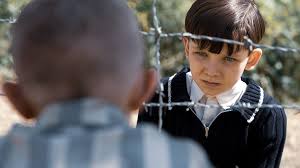
The Boy in the Striped Pyjamas is a historical fiction novel written by John Boyne. The book is about a friendship between two boys on opposite sides of a fence, Bruno and Shmuel. The story is set in World War II, and Bruno’s father is a commanding officer in the Nazi party. His family suddenly moves to Auschwitz to be in charge of the camp. However, this nine-year-old boy knows little about his father or where they are. The closest he gets to the truth is when his sister, Gretel, tells him that their new home is called “Out-With”. One day, while walking along the fence, he meets a boy called Shmuel who is on the other side of the fence. He goes back many times and becomes quite close with Bruno. A year after arriving at Auschwitz, his mother tells him they are returning to Berlin. As a final goodbye, Shmuel and Bruno wanted to properly be together, so Bruno crawls to the other side of the fence through a small opening, and Shmuel hands him a striped pyjama. However, before they could search for Shmuel’s father, who had gone missing, and then head off to play, they were surrounded by officers and were directed to a room.
Bruno was never seen again.
I’m sure this summary was of no use to most, as many people have read this with their class or as kids and have gone on to use this as their book they have chosen to ‘read’ when a teacher tells them they have to read a book over the semester. In fact, it is such a classic that it frustrates English teachers, and one of the teachers I had did not allow this as a chosen book, and this is how it is now remembered: the book you write about if you didn’t want to read or the free pass since you have already watched the movie or read the book for a past reading test. This evidently harms the story of the book, and it should be remembered for what it is: a beautifully written story for one of the most tragic events in all of history. And yet, The Boy in the Striped Pyjamas is not typically discussed as a book about Auschwitz or Hitler’s people but rather as this evocative novel; no one holds a grudge against the father or finds Bruno’s naivety frustrating and ridiculous. A friend I know has only ever cried to this sole book. Not The Book Thief, not All the Light We Cannot See, but The Boy in the Striped Pyjamas, which can be understood at the age of eleven, although not fully grasped, as there are many underlying themes, like the sole thing that brought Bruno happiness leading to his demise. Perhaps the simplicity could actually be the cause of this intense sadness it provokes, since the reader isn’t focused on every literary device or motif the writer puts down but rather the simple plot.
This story is like what has occurred to the word ‘romance’, which comes from Romanticism, a literary and artistic movement that is said to have lasted from 1790 to 1850, despite having a huge influence on modern literature and art. The Romanticism era was made up of writers like Victor Hugo and William Blake, who were angered by the Enlightenment as it boiled down to purely science and concrete thoughts. Romantics wanted to cause emotions. However, not simply love and joy, but rather melancholy and sensibility. They wanted to create vulnerable characters who focused their stories on their feelings, as well as make stronger connections to God and appreciate nature, which was typically described as divine. Nonetheless, despite all the effort these writers and painters put into their work for this movement, the only connotations around the word ‘romance’ have amounted to love and attraction. In fact, Merriam-Webster defines romance as “a feeling of being in love”. This is a painfully simple summary of a word that defines an entire period of time that people are very passionate about. At the very least, romance now defines one of the aspects romantic writers wanted to shine the spotlight on, whereas The Boy and the Striped Pyjamas has become a novel English teachers themselves resent. Perhaps a new era of writers is born, and they shall give this story the appreciation it deserves.