By Myungjong Kang, Year 12
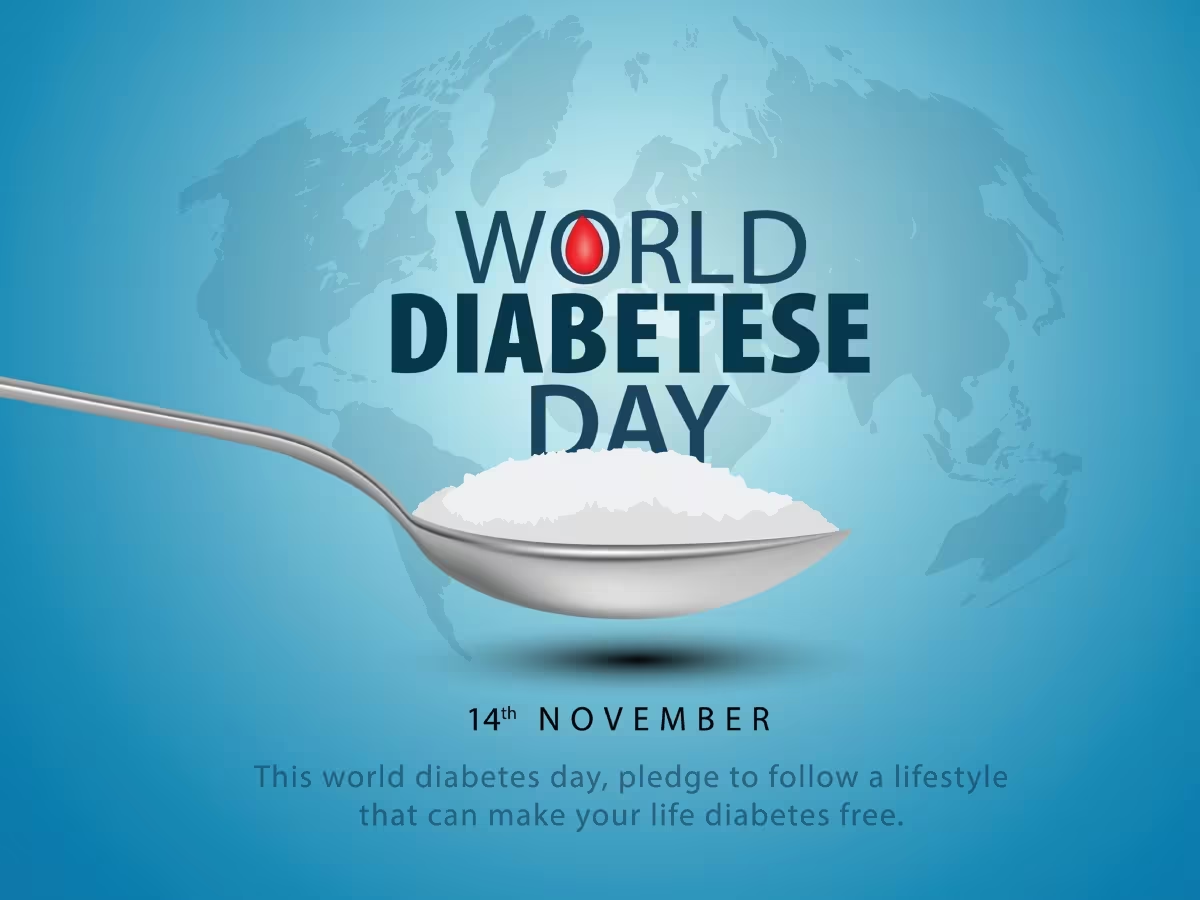
On 14 November 2025, the world observed World Diabetes Day, and the theme this year, “Diabetes across life stages”, hits especially close to home for high-school students. As the World Health Organisation explains, diabetes isn’t just an adult disease: it can affect people from childhood through old age, and managing it well often means building healthy habits early.
Diabetes happens when the body either doesn’t make enough insulin or can’t use it properly. Insulin is the hormone that lets sugar (glucose) enter your cells to produce energy. Without it, too much sugar stays in the blood, which can damage organs over time. Two main types affect young people. Type 1 diabetes, commonly appearing in children and adolescents, is an autoimmune disease. Type 2 diabetes, which used to be considered an “adult-onset” disease, is increasingly seen in younger people, largely due to lifestyle changes.
According to the International Diabetes Federation (IDF) Diabetes Atlas, the number of young people with type 1 diabetes continues to rise. The 2025 edition estimates that 1.8 million children and young adults under 20 have type 1 diabetes worldwide. In addition, the IDF notes a worrying trend: many people with diabetes don’t even know it. Over 250 million people globally are unaware they have the disease, some of whom could be at serious risk.
High school students should care for three reasons. First, early habits matter. High school is where many of us form long-term lifestyle habits. What we eat, how much we move, and how well we sleep can influence whether we’re at risk for type 2 diabetes later. The United Nations points out that tackling diabetes early, during life stages like adolescence, is one of the most effective ways to prevent its long-term effects. Second, some of your classmates may be silently managing diabetes every day. This could involve checking blood sugar, injecting insulin, or using a glucose monitor. Having support and understanding at school makes a big difference. Third, without recognition and care, diabetes can lead to serious complications: heart problems, kidney damage, nerve issues, and more.
So what can we do in order to solve this problem? At school, students can play an important role in promoting diabetes awareness and support. Raising awareness is key; educating classmates and teachers about the signs, symptoms, and everyday realities of diabetes helps reduce shame and ensures that those affected feel understood. Encouraging healthier lifestyle habits, such as taking walking breaks, choosing nutritious snacks, and staying physically active, can also lower risk and improve overall well-being. It’s equally important to support students who manage diabetes daily by respecting their privacy when they need to check their glucose levels or take insulin and offering understanding rather than judgment. Finally, students can advocate for school-wide measures like accessible water stations, private areas for injections, and regular health education sessions, all of which contribute to a more supportive and inclusive environment.
In conclusion, World Diabetes Day serves as a reminder that diabetes is not a distant or purely adult issue, as it affects people our age, our classmates, and our future habits. Understanding what diabetes is, recognising how widespread it has become among young people, and acknowledging the role that schools play in supporting those who have it are all essential steps toward building a more informed and empathetic community. By raising awareness, encouraging healthier choices, supporting peers who manage the condition, and advocating for simple but meaningful changes within our school, we can help reduce preventable risks and make life easier for those already affected.
Works Cited
“World Diabetes Day 2025.” Who.int, 2025, www.who.int/campaigns/world-diabetes-day/2025.
Magliano, Dianna J., et al. “Global Picture.” Nih.gov, International Diabetes Federation, 2021, www.ncbi.nlm.nih.gov/books/NBK581940/.
“Over 250 Million People Worldwide Unaware They Have Diabetes, according to New IDF Research.” International Diabetes Federation, 11 Aug. 2025, idf.org/news/idf-diabetes-atlas-11th-edition/.