By Cosmo Clark, Year 11
Art has always been shaped by the tools we use to create. Photography pushed painters in new directions. Digital editing flipped film and music on their heads. Every time a new technology shows up, it shakes up our idea of what art can be. Now it’s AI’s turn. This time, things are moving fast, and the conversation is getting heated.
AI is quietly showing up everywhere in music. It can spit out a beat, a singer’s voice, help finish a lyric, or compose an entire track. But unlike a guitar or a synthesiser, AI doesn’t just sit there waiting for you to play it. It actively makes choices by studying millions of existing songs and predicting what works. That’s where the line starts to blur. Is it inspiration, or is it just really good copying?
Some musicians are all in. They see AI as a fresh set of ears, a co-writer that never gets tired. Others are wary. To them, it feels like a shortcut, one that risks squeezing the humanity out of music.
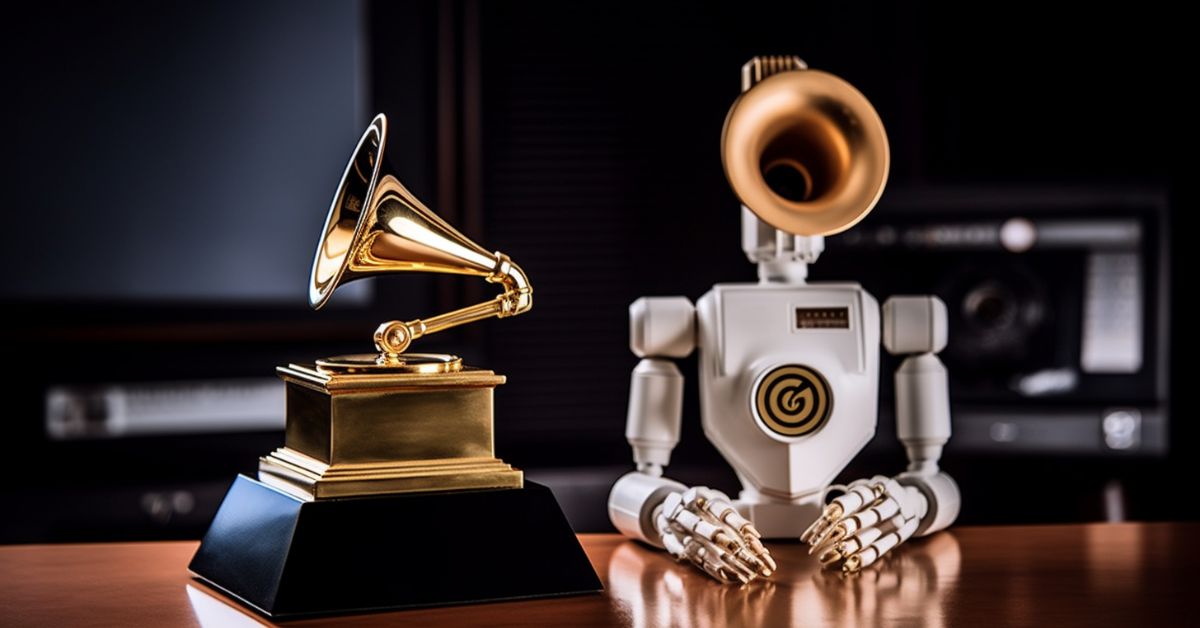
The Grammys had to say something. In 2024, they made it clear: if a piece of music doesn’t have “meaningful human authorship”, it’s not eligible for an award. That decision wasn’t just bureaucratic. It was a signal. Think about it. If AI-generated songs could compete head-to-head with human-made ones, they’d flood the field. They’re faster, cheaper, and endlessly replicable. Human artists wouldn’t stand a chance. So the Grammys drew a line in the sand, saying, in effect, art isn’t just about what you hear. It’s about who made it and why.
That line got tested fast. Remember that AI-generated track that sounded just like Drake and The Weeknd? It went viral. It sounded real. It even felt emotional. But neither artist had anything to do with it. Once people found out, something shifted. The song hadn’t changed, but our connection to it had. We weren’t hearing someone’s story anymore. We were hearing a really good imitation of one.
That’s the thing about art. It’s never just been about how something looks or sounds. It carries experience, context, struggle, and joy. When a machine makes something that mimics all that, it can be dazzling. But without a life behind it, it doesn’t quite land the same way. We’re not connecting with a person. We’re reacting to a pattern.
Still, pretending AI doesn’t exist isn’t the answer. Plenty of artists aren’t fighting it. Some are even experimenting with it. Artists such as Björk demonstrate that technology can expand creativity when guided by a clear human vision. Synthesisers didn’t kill musicianship. They just expanded the palette. AI can do the same if it’s used with care.
So maybe the question isn’t whether to use AI, but how. When it amplifies an artist’s voice, it can unlock new worlds. When it replaces that voice entirely, art starts to feel more like content. The Grammys’ stance isn’t just about rules. It’s about what we value. We want to know someone was there, behind the sound, making a choice.
AI isn’t the end of art. It’s a fork in the road. It’s forcing us to ask: in a world where machines can imitate feeling, what do we still call creativity? By drawing boundaries, the Grammys are doing more than gatekeeping. They’re reminding us that art is (and always has been) about the human presence behind it. Protecting that presence might just be the most important artistic act of our time.
Sources
https://www.grammy.com/news/ai-copyright-protecting-music-creators-united-states-copyright-office
https://en.wikipedia.org/wiki/66th_Annual_Grammy_Awards#Artificial_intelligence_ineligibility
https://time.com/6288131/grammys-ai-rules
https://ew.com/awards/grammys/grammys-new-rules-ai-recordings-total-nominees
https://yalelawjournal.org/essay/ai-and-the-sound-of-music
https://hdsr.mitpress.mit.edu/pub/1j7onk28/release/5
https://en.wikipedia.org/wiki/Heart_on_My_Sleeve_(Ghostwriter977_song)
https://apnews.com/article/walk-my-walk-blanco-brown-2c9bbde6e88434365640c50e2998cfe2
https://www.wired.com/story/bbl-drizzy-foretold-the-future-of-ai-music