By Emma Petzoldt, Year 12
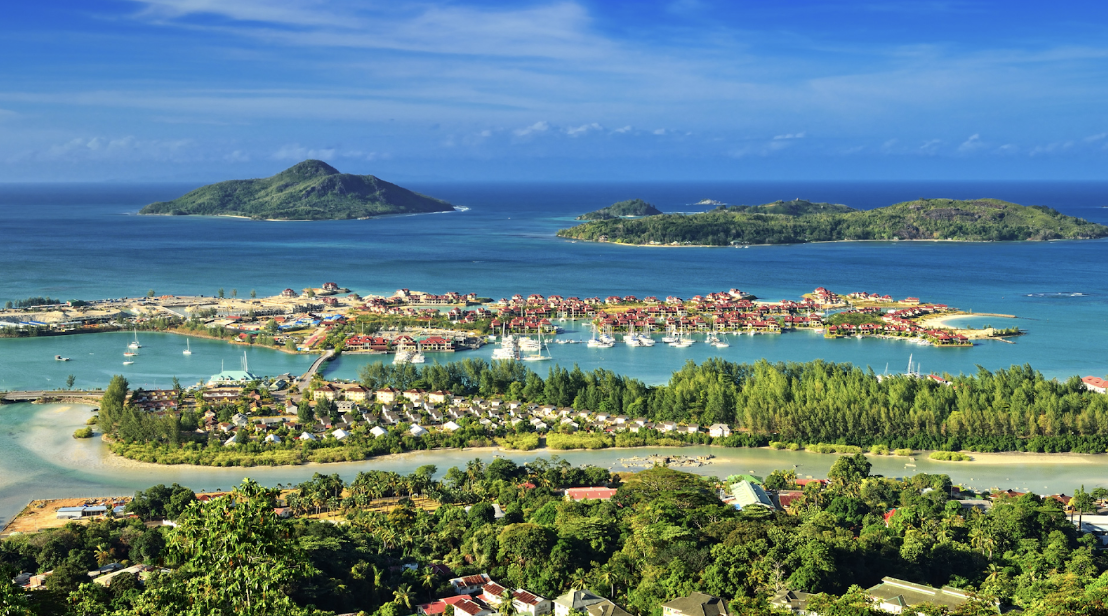
The Seychelles is an archipelago in the Indian Ocean, made up of 115 islands known for its beautiful beaches, coral reefs, and nature reserves. It is considered an idyllic vacation destination for many people. Every year, it receives more tourists than its own population and is also the richest country in Africa, as it has the highest nominal GDP per capita. In recent years, the Seychelles has increasingly become known for trying to control the number of tourists and for leading the way in responsible and sustainable tourism.
Unlike many mass tourism destinations such as Paris, Bali, and Santorini, which prioritize growth, the Seychelles has chosen a different path. The government recognized that the country’s natural beauty is both its greatest asset and its most fragile resource, leading it to take decisive action. This realization became even stronger after the COVID-19 pandemic, when global travel came to a halt. With tourism revenues suddenly disappearing — and the tourism sector representing around 60% of its GDP — the country experienced a significant economic shock. This crisis exposed how heavily the national economy depended on tourism and how vulnerable it was.
Since then, the Seychelles has intentionally pursued a more balanced approach. Tourism remains the backbone of the economy, but the emphasis is now on quality rather than quantity. The number of tourists has gradually recovered, rising from around 332,068 in 2022 to about 350,000 in 2023. By late 2025, arrivals had grown by over 12% compared to 2024 and were surpassing pre-pandemic levels.
To protect its breathtaking ecosystems, the country has established strong environmental frameworks. Approximately 50% of its land territory and 30% of its marine areas are protected, one of the highest conservation proportions in the world. Famous protected sites include the Vallée de Mai Nature Reserve, home to the rare coco-de-mer palm, and the Aldabra Atoll, known for its large population of giant tortoises. These measures aim to preserve coral reefs, sea turtles, fish populations, and biodiversity on land.
The Seychelles has also introduced innovative policies to support sustainable tourism. In 2023, the government introduced the Tourism Environmental Sustainability Levy, charging tourists a small per-night fee depending on the type of accommodation, with larger resorts paying higher rates. This revenue directly funds environmental projects and rehabilitation efforts. It ensures that tourism income not only supports the economy but also protects the very environments that attract visitors.
In addition, a central element of the Seychelles’ sustainable tourism strategy is the careful control of visitor numbers. The government limits large-scale hotel developments and encourages smaller, eco-friendly accommodations. By managing the carrying capacity of the islands, the Seychelles prevents overtourism from damaging fragile ecosystems.
As a result, the Seychelles has become a leading example of responsible and sustainable tourism. The country demonstrates that it is possible to balance economic growth with environmental conservation. For travelers, this means visiting a paradise that is not only breathtakingly beautiful but also carefully managed for long-term sustainability. The government has successfully shown how natural resources can be protected while maintaining economic prosperity, as reflected in the nation becoming Africa’s richest country.