By Sofia Paola Sarandrea, Year 13
Introduction to Cubism:
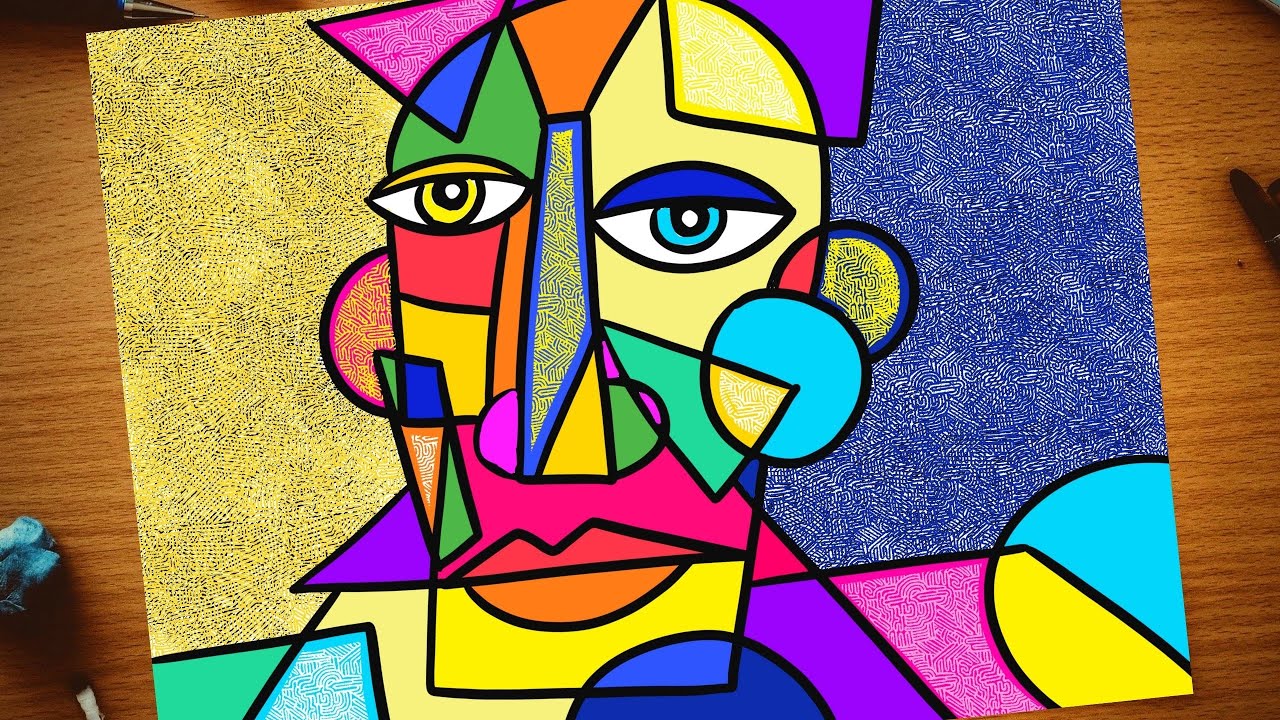
A new and shocking style of art appeared in Paris at the beginning of the 20th century. Instead of showing the world in a real way, painters began breaking objects and people into sharp, odd and geometric shapes. They painted from several angles and rejected proportion all at once, creating pictures that look confusing, even messy, to many spectators. This bold and venturesome style became known as Cubism. At first, the public mocked it, but it grew over time to be one of the most beloved and revolutionary art movements in history.
The Birth of Cubism
Cubism began in the early years of the 20th century, specifically in 1907, popularised through the Spanish painter Pablo Picasso and the French artist Georges Braque, who are often credited with starting the movement. Both artists were inspired by African art, ancient sculpture, and the works of Paul Cézanne, who had been experimenting with simplifying forms. Together, Picasso and Braque created a revolutionary new approach to painting that rejected traditional art norms that would usually contain perspective and realism.
Famous Cubist Artists
Though Picasso and Braque were the developers, other artists soon followed along with them. Juan Gris was one Spanish painter who became well-known for his clear and structured Cubist works. Fernand Léger also played a very key role, blending Cubism with modern themes like machines and city life. Together, these artists pushed the boundaries of what a painting could be and could look like.
What Made Cubism Different from Other Artistic Styles?
Cubism was a completely different art movement compared to anything the art world had seen before. Instead of creating paintings to be as realistic as possible, Cubists broke them into cubes, triangles, cones, and other geometric shapes. They often showed several viewpoints at the same time, as if the viewer could walk around the subject while looking at it. Colours were usually muted at first, with browns and greys dominating, as seen in Braque’s work, but later Cubist works, such as Picasso’s paintings, became brighter and more decorative.
Two Phases of Cubism
Art historians generally break Cubism into two phases:
- Analytical Cubism (1907–1912): This stage focused on breaking down objects into smaller parts. Paintings were often made up of overlapping shapes in neutral tones, making them look almost like puzzles.
- Synthetic Cubism (1912 onwards): This stage introduced brighter colours and simpler shapes. Artists also began adding materials like newspaper, fabric, and paper cutouts into their works, inventing collage.
The Legacy of Cubism
When Cubism first appeared, it faced a large amount of criticism. Critics called it odd and unappealing. However, as time passed, it came to be one of the most revolutionary styles of art. Cubism influenced countless movements, from futurism to abstract art, and changed the way people thought about perspective and representation. Today, the works of Picasso, Braque, and their peers are admired around the world and inspire countless artists globally.
Conclusion
Cubism challenged and rejected a large extent of what people thought they knew about painting. By daring to be different, Picasso, Braque, and their fellow artists created a new visual language that transformed modern art. What was once criticised as nonsense is now appreciated as genius, proof that sometimes the most radical ideas can turn themselves into extremely influential ones.
Sources: