By Alexian Cabri, Year 12
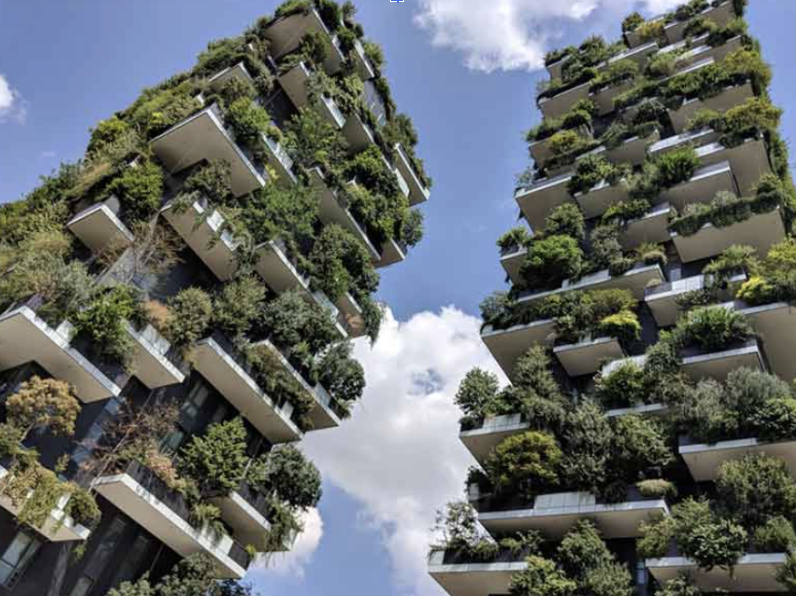
As cities grow denser and green space becomes increasingly limited, vertical gardens have emerged as an innovative approach to integrating nature into the built environment. Vertical gardens, also known as living walls, consist of plants grown on vertical surfaces such as building facades, interior walls, or freestanding structures. Beyond their aesthetic appeal, these systems offer meaningful environmental and social benefits that support broader sustainability goals.
One of the primary contributions of vertical gardens is their ability to improve air quality. Plants absorb carbon dioxide and certain air pollutants while releasing oxygen. In urban areas where traffic and industrial activity concentrate emissions, vertical gardens can help reduce airborne pollutants and improve overall environmental conditions. When installed indoors, they also contribute to healthier indoor air by filtering fine particles and regulating humidity.
Vertical gardens play an important role in climate regulation within cities. Vegetation on building surfaces reduces heat absorption by shading walls and cooling the surrounding air through evapotranspiration. This helps lower indoor temperatures during warmer periods and reduces the urban heat island effect commonly observed in dense city centers. As a result, buildings with vertical gardens often require less energy for cooling, contributing to a more sustainable use of resources.
Water management is another key sustainability benefit. Many vertical garden systems are designed to use efficient irrigation methods, such as drip systems or recycled greywater. Plants retain rainwater, slowing runoff and reducing pressure on urban drainage systems. This is particularly valuable in cities that experience heavy rainfall or face increasing risks of flooding.
In addition to environmental benefits, vertical gardens support biodiversity in urban areas. They create habitats for insects, birds, and other small species, especially when native plants are used. These green structures can act as stepping stones between parks and other green spaces, helping reconnect fragmented urban ecosystems.
Vertical gardens also contribute to human well-being. Exposure to greenery has been linked to reduced stress, improved concentration, and enhanced overall quality of life. In workplaces, schools, and residential buildings, living walls can foster a stronger connection to nature, encouraging greater environmental awareness and appreciation.
As cities seek sustainable solutions to environmental challenges, vertical gardens demonstrate how design and ecology can work together. By transforming unused vertical surfaces into living systems, they offer a practical and scalable way to improve urban sustainability. In a world where space is limited but environmental responsibility is essential, could vertical gardens become a defining feature of the sustainable cities of the future?