By Skyler Mason, Year 12.
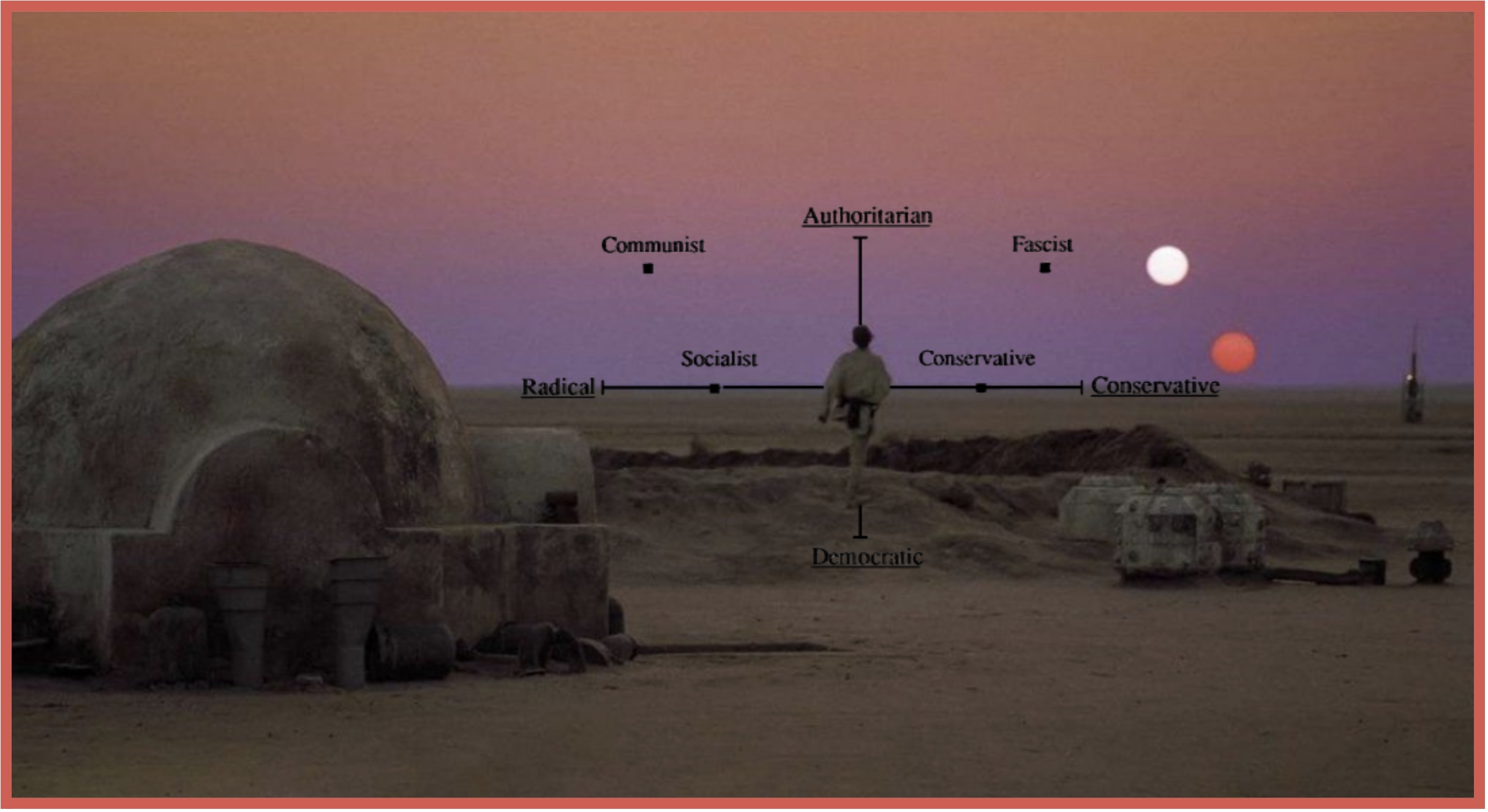
While Star Wars is recognized as being a defining and iconic moment in the space fantasy genre, a characteristic of the films that’s often forgotten is the strong political messaging it conveys.
From its very origin, Star Wars has been a bold political commentary on contemporary world events and the global distribution of power. Despite the conception of the saga being drawn from heroic adventure stories, real-world politics had a significant hand in inspiring the events of the original trilogy—particularly Nixon-era politics. In fact, the Galactic Empire, the fascist dictatorship that acts as the primary antagonistic force throughout the saga, was inspired by the United States during the Vietnam War. George Lucas viewed the American government as a menacing, imperialistic power, and this perspective manifested in his using it as a muse for evil. To complete the allegory, Lucas models the rebel forces on the Viet Cong, a connection conveyed through the ragtag style associated with their guerrilla warfare tactics.
Although Star Wars has a lot to say regarding contemporary politics, its portrayal of democracy also draws from history. The unravelling of the Republic has significant real-world symmetries, namely to the collapse of Weimar Germany. Hitler’s and Chancellor Palpatine’s journeys to absolute power are mirrored in three main ways.
First, both gained their political footing through the use of legitimate, democratic means: Hitler through the framework of the Weimar Republic, being appointed chancellor in 1933, and Palpatine being elected senator and then supreme chancellor through the Galactic Senate.
Additionally, they both exploited crises in order to receive emergency powers. For example, the Reichstag Fire in 1933 enabled Hitler to petition for the suspension of civil liberties, therefore reducing the democratic quality of Germany. Similarly, Palpatine engineered the Clone Wars to justify staying in power longer than his term dictated, as well as to gain executive powers.
Finally, in both cases of dictatorship, they enjoyed significant public support. The German public supported or, at a minimum, tolerated the Nazi regime up until its collapse at the end of the Second World War. As for Star Wars, the final act of autocratization is met with raucous cheers. In the words of Padmé Amidala, “So this is how liberty dies, with thunderous applause.”
Ultimately, it’s interesting to explore the similarities between fact and fiction, especially in media so politically intentional as Star Wars. Additionally, such a clear representation of how quickly democratic institutions can be eroded serves as both a historical remnant and a cautionary tale for the future.