By Emma Petzoldt, Year 12
Football, one of the most popular sports in the world, is known for many aspects, but to what extent is it actually sustainable? Football has the power to unite people through shared love, emotions, and passion. However, it also has impacts on the environment, people, and economic development. This raises an important question when considering whether football is truly sustainable.
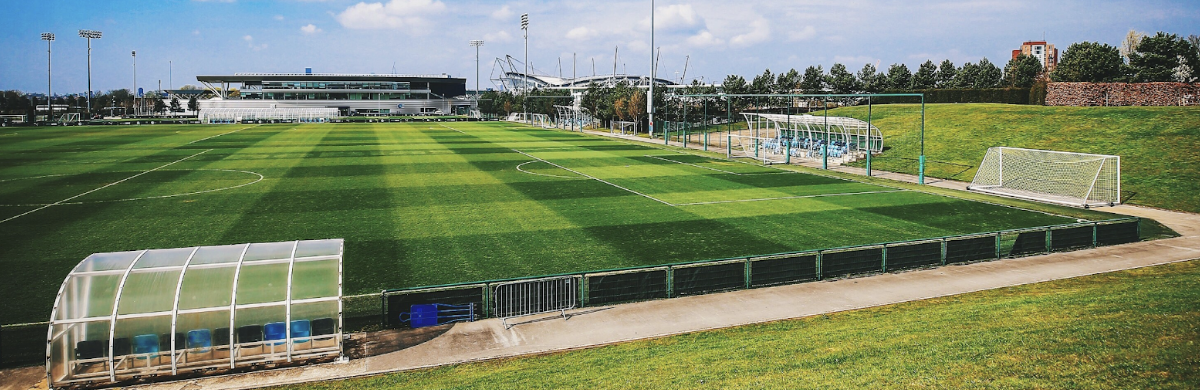
From an environmental point of view, football is not always sustainable. A regular football pitch is around 105 metres long and 68 metres wide and can be made of either natural grass or artificial turf. Grass pitches consume a large amount of water and require constant maintenance. On average, a grass pitch requires between 20,000 and 30,000 litres of water per day during hot and dry periods, especially in summer. Groundskeepers must also regularly mow, fertilise, and maintain the fields to keep them playable. These activities require additional energy, equipment, and chemicals, which can increase the environmental impact.
Furthermore, artificial turf pitches also present environmental concerns. Artificial pitches are mainly made from plastic-based materials. For example, they often contain non-recyclable materials such as nylon, polyethylene, and polypropylene, which are heated and mixed with colourants and UV stabilisers to create strands that resemble grass. These pitches create waste problems once they are no longer functional because they are difficult to recycle. They are also permanent sources of microplastics, which can spread into nearby environments and harm wildlife and ecosystems.
However, artificial turf also has some advantages. Although the initial installation cost is extremely high, the maintenance costs are generally lower than those of natural grass. Artificial pitches can last up to 15 years depending on usage, and they can be used in harsher weather conditions such as winter or heavy rain with less damage.
In addition to the pitches themselves, football also raises other environmental concerns. Stadiums require large amounts of energy for lighting, heating, cooling, and maintenance. During match days around the world, thousands of fans travel to and from stadiums, often by car, bus, train, or plane, which increases carbon emissions. Large international tournaments such as the FIFA World Cup or regional competitions can have an even greater environmental impact because they attract more fans than regular matches. Teams, officials, and media representatives also travel long distances across the world, often using chartered flights.
Despite these challenges, the football industry has started exploring more sustainable solutions. FIFA (Fédération Internationale de Football Association) has introduced a Sustainability and Human Rights Strategy for the upcoming World Cup hosted by the United States, Mexico, and Canada. This strategy focuses on four interlinked pillars of sustainability: social, environmental, economic, and governance. It also aims to contribute to 12 Sustainable Development Goals (SDGs). Host cities are required to implement environmental plans for their stadiums to demonstrate how FIFA’s sustainability requirements are met. The strategy also focuses on creating positive impacts in other areas. For example, economically, the goal is to support local development, while socially, the aim is to provide a safe and inclusive environment and leave a positive legacy.
In conclusion, football still faces many sustainability challenges, particularly regarding environmental impacts such as water consumption, microplastics, and carbon emissions from travel. However, new technologies, strategies, and sustainability initiatives are emerging within the football industry. While football is not yet fully sustainable, continued efforts from organisations, clubs, and fans could help reduce its impact and make the sport more sustainable in the future.